


Website Maintenance Cost UK: A Small Business Price Guide for 2026
Table of Contents
Website maintenance cost in the UK usually starts at £30 to £50 a month for a basic care plan. Agency plans commonly run from £50 to £300 a month. Some providers quote before VAT, so check whether 20% needs adding.
Website maintenance means the regular jobs that keep a site safe, working and up to date. That includes software updates, backups, security checks, and small content changes.
We build and maintain websites for small businesses in Derbyshire and across the UK. Running costs come up on almost every project we take on. This guide covers what you get for your money, the extra costs people forget, and when doing it yourself makes sense.
How much does website maintenance cost in the UK?
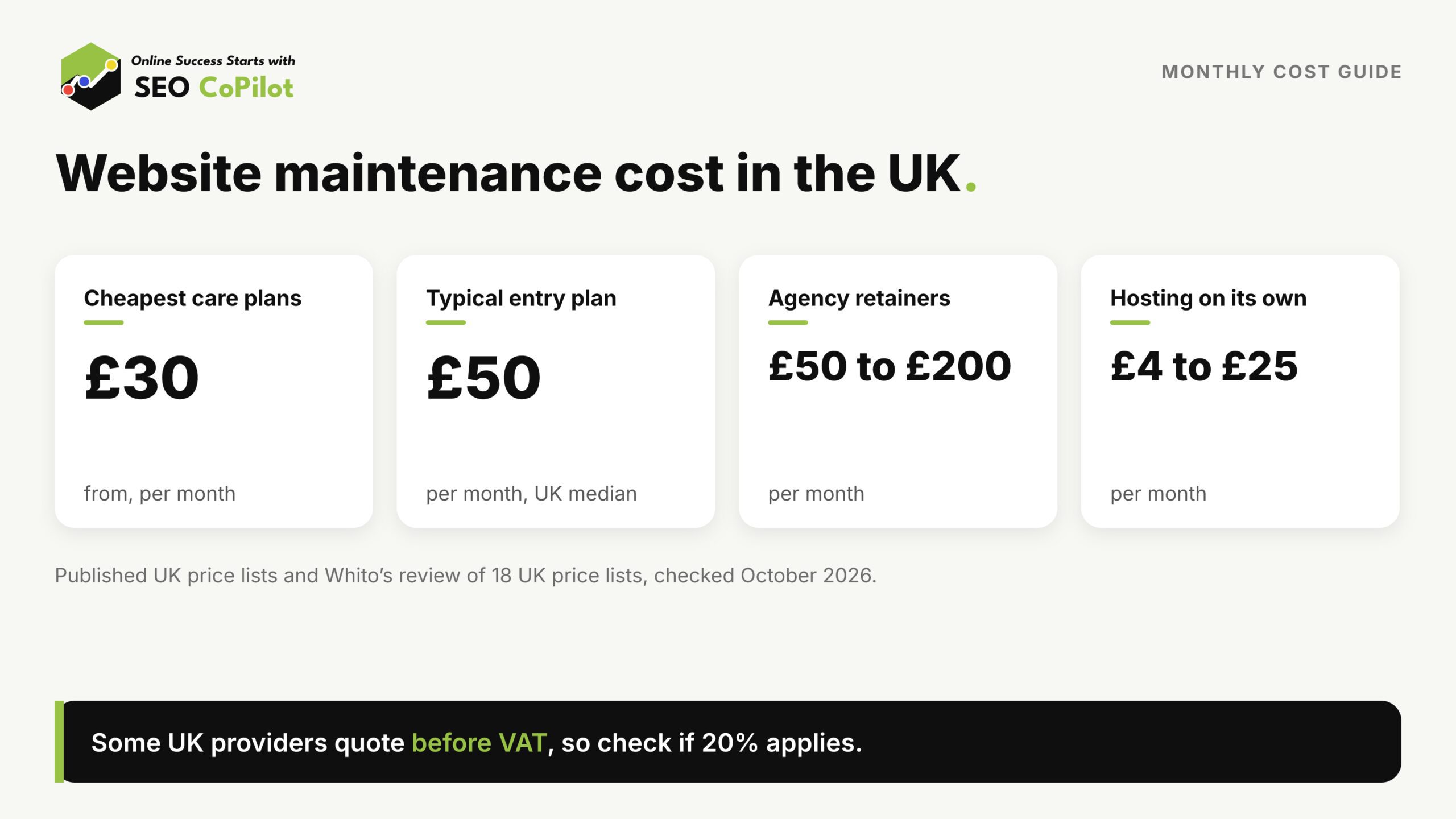
Website maintenance in the UK costs from about £30 a month for a basic plan. A review of 18 UK price lists in September 2026 found the typical entry plan was £50 a month. Agency plans usually cost £50 to £300 a month.
We checked published UK prices and guides in October 2026. Here is what they showed:
- Cheapest care plans: from £30 a month for updates, backups, security and fixes.
- Typical entry plan: £50 a month, the middle figure in Whito’s review of UK care plans. Whito describes itself as an independent UK research publisher.
- Agency retainers: typically £50 to £200 a month, according to the same review.
- Plans with support time: one started at £90 a month plus VAT, with 2 hours of changes included.
Another UK agency puts basic website management at £50 to £300 a month. We find prices climb with the number of pages, plugins and features, and with how fast you need help when something breaks.
What does website maintenance include?
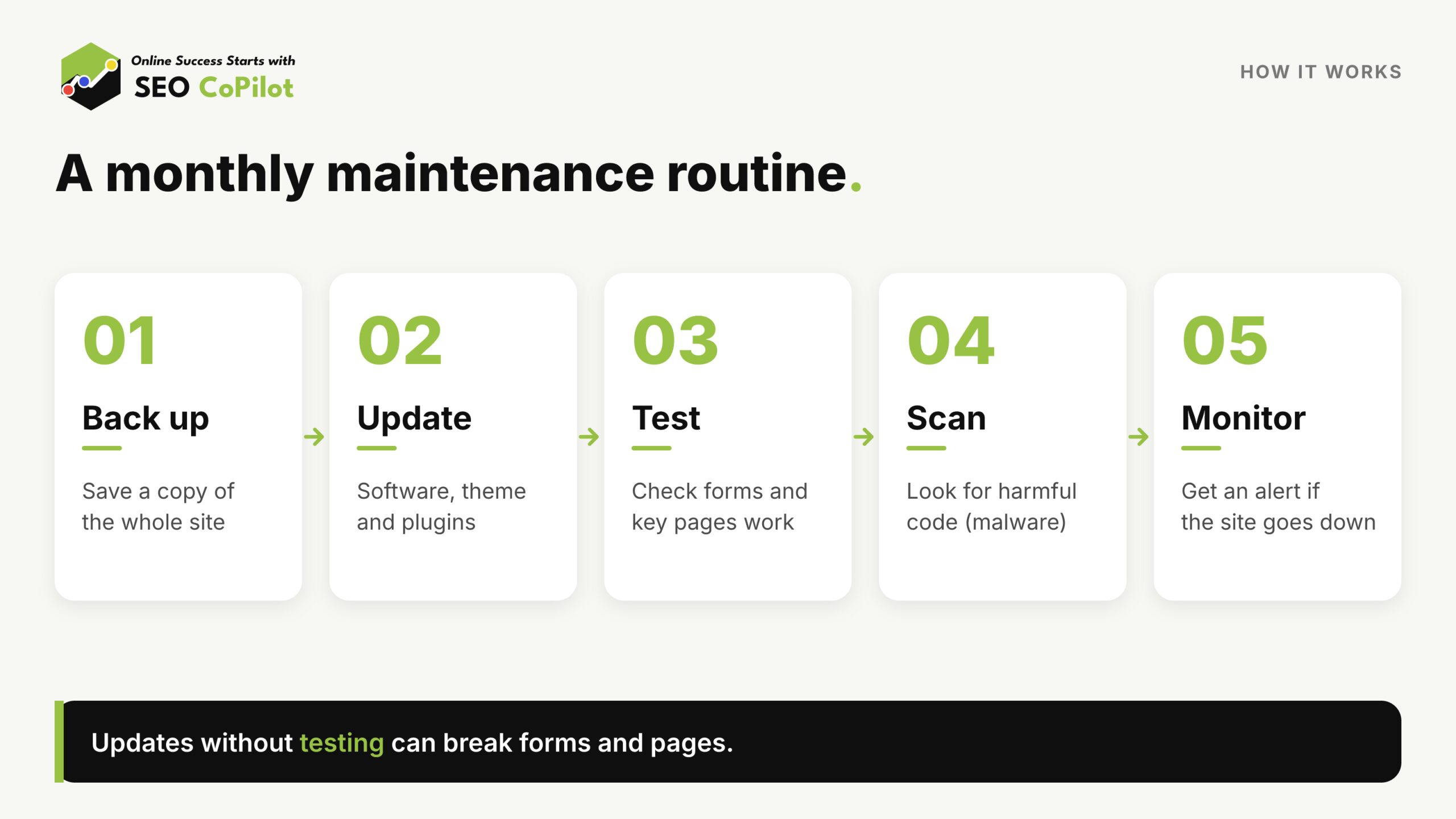
Website maintenance usually includes software updates, regular backups, security scans, uptime monitoring and sometimes small content changes. In our experience, some plans test the site after each update and fix anything that breaks, while others only run the updates. Read what each one covers before you compare prices.
These are the jobs a typical plan covers:
- Updates: installing new versions of the website software, its theme and its plugins. A plugin is an add-on that adds an extra feature, such as a contact form.
- Backups: saved copies of the whole site, so you can restore it if something goes wrong.
- Security scans: checks for malware, which is harmful code that hackers add to a site.
- Uptime monitoring: an alert if the site goes offline.
- Small changes: new text, photos or prices, often limited to a set number of hours.
Some plans also include hosting, which is the rented server space where your website lives.
How much does WordPress maintenance cost?
WordPress maintenance in the UK starts from about £30 a month for a basic plan. One UK provider’s WordPress plan starts at £90 a month plus VAT and includes 2 hours of changes. A WordPress site needs regular attention because plugins need updates to stay secure.
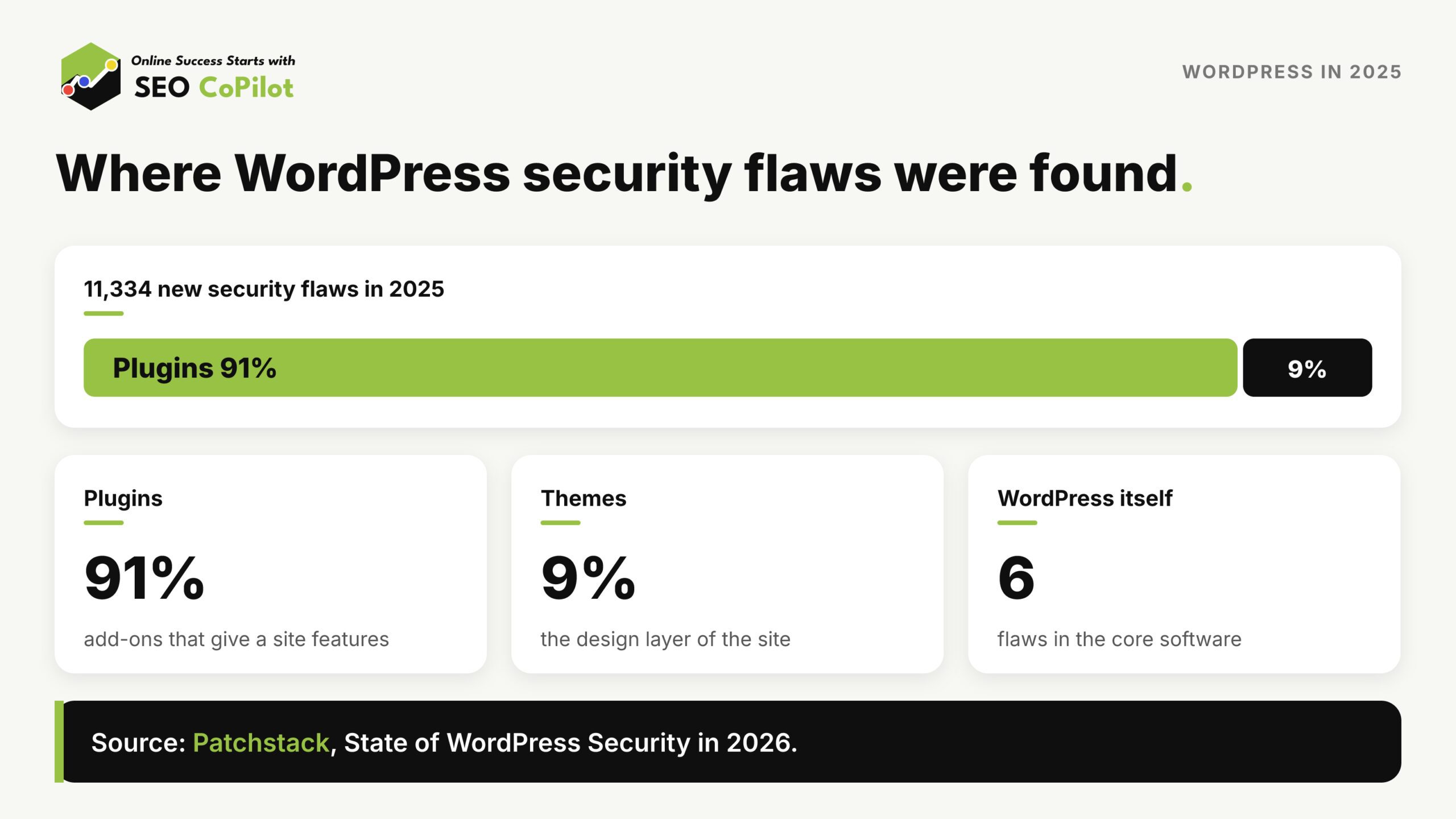
Plugins and themes are where most WordPress security risk lies.
Why plugins need the most attention
Patchstack, a company that sells WordPress security products, found 11,334 new security flaws across WordPress in 2025. It reported that 91% were in plugins, 9% in themes, and only six in WordPress itself.
WordPress’s own guidance says to keep WordPress up to date and to make sure your plugins are always updated. In our view, that means a WordPress site needs regular checks, whether you do them yourself or pay someone.
What other website running costs should you budget for?
On top of maintenance, budget for hosting, your domain name, any paid plugin licences, and hourly changes. Whito’s UK price review puts hosting at £4 to £25 a month and domain renewal at £10 to £30 a year. The SSL certificate that secures your site can be free.
Hosting
Some maintenance plans include hosting, while others sell it as an add-on. The same review puts hosting at £50 to £300 a year when you pay for it separately.
Domain name
Your domain is your web address, such as yourbusiness.co.uk. It renews every year or every few years. The review says a .co.uk domain costs roughly £10 a year.
SSL certificate
An SSL certificate encrypts the connection between your site and its visitors. It switches your site to a secure HTTPS connection. Let’s Encrypt, a free certificate authority, gives these certificates at zero cost.
Premium plugin licences
Some plugins charge a yearly fee for updates and support.
What does a year of website maintenance cost?
A small business website can cost about £420 a year for a brochure site, or £2,730 a year for ecommerce or larger sites. That covers a maintenance plan, hosting and a domain. Whito’s UK review puts total running costs at £500 to £2,000 or more a year, so treat any yearly figure as a rough guide.
A worked example
Here is a worked example for a small brochure site, using the published UK figures in this guide. Check whether each price includes VAT.
- Maintenance plan: £30 to £200 a month, so £360 to £2,400 a year.
- Hosting, if paid separately: £50 to £300 a year.
- Domain renewal: £10 to £30 a year.
- SSL certificate: £0, using a free certificate.
That puts a small site at about £420 to £2,730 a year. Paid plugin licences and extra hours come on top.
At SEO CoPilot we charge £36.66 for a small brochure website and £56.66 for larger sites and ecommerce. This includes hosting and backups, security scans, WordPress and plugin updates. We charge extra if you want us to update your website content.
Average cost of website design for small businesses
The average cost of website design for small businesses is hard to pin down. One UK guide puts a professionally built site at about £1,500 to £6,000, and says most businesses pay £3,000 to £6,000. Maintenance then adds a monthly cost.
What UK price guides say
Here is how Whito’s UK website design cost research breaks it down:
- Freelancer brochure site of about 5 pages: £1,500 to £3,000.
- Agency brochure site: £3,000 to £5,000.
- Ecommerce site: £5,000 to £20,000 or more.
A brochure site is a small site that tells people about your business, with no online shop. Fixed price packages from some designers cost far less, and Whito found a middle price of £520 across 28 of them.
A second UK guide puts freelancer builds at £700 to £4,000 and agency custom builds at £3,500 to £12,000, before VAT.
Running costs on top of the build
We price every website design project on its page count and the features it needs. Running costs add up too. A £ 75-a-month plan comes to £2,700 over three years, so it belongs in the budget from the start.
Should you buy website design and hosting for small business sites together?
In our experience, buying website design and hosting together gives a small business one contact when something goes wrong. The people who built the site also look after it.
The trade-off is that you rely more on one provider. Before you sign, check who owns the site, its logins and its backups. At SEO CoPilot, you will own the website once we have designed and built it and, of course, the final balance has been paid.
Ask for admin access and a copy of your site in writing. Then, if you ever move provider, you can take the site with you.
Website maintenance packages UK: what should you compare?
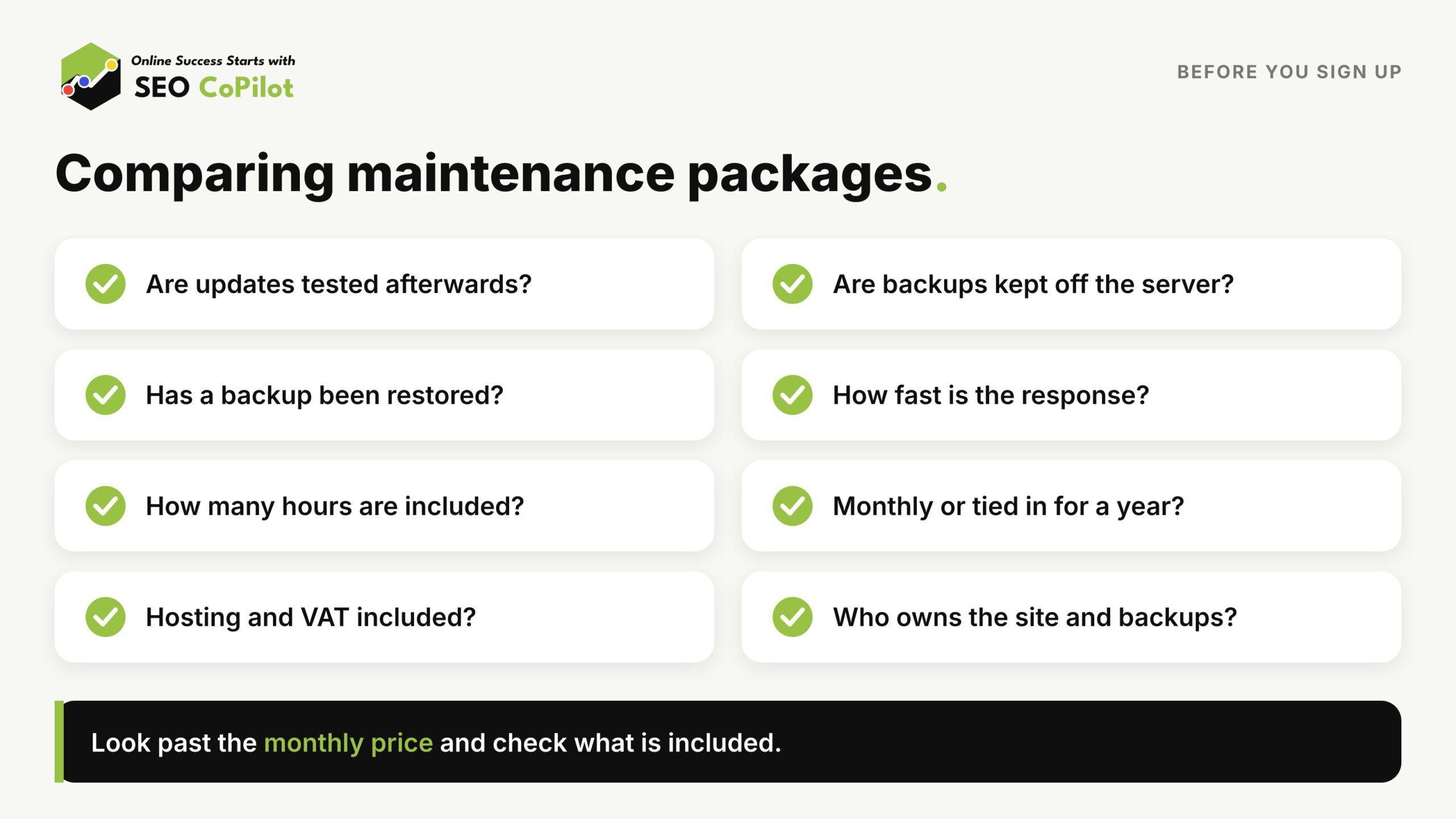
When you compare website maintenance packages in the UK, look past the monthly price. Check how often updates run and whether someone tests the site afterwards. Then check where backups live, how quickly problems get fixed, and how many hours of changes you get.
A plan that installs updates without checking the site afterwards can leave problems unnoticed.
Use these questions when you look at a package:
- Are updates tested on the live site afterwards, or just installed?
- Are backups kept somewhere other than the website’s own server?
- Has a backup ever been restored to prove it works?
- How quickly will someone respond if the site goes down?
- How many hours of changes are included, and what does extra time cost?
- Is the contract monthly, or are you tied in for a year?
- Who owns the site, its logins and its backups if you leave?
- Is hosting included, and are prices shown with or without VAT?
Published UK rates for extra time vary. We found one provider charging £30 an hour, and another charging £60 an hour for time beyond the 2 hours in its plan.
Can you maintain a website yourself?
Yes, you can maintain a website yourself. WordPress can update plugins and themes automatically, and backup plugins can save copies of the site. Doing it yourself mostly costs time, plus any paid tools you choose.
We find it works best for simple sites with few plugins and an owner who is happy fixing problems.
WordPress added automatic updates for plugins and themes in version 5.5. You choose which plugins and themes to switch them on for. WordPress’s own help page suggests making sure you can roll back to an earlier version before turning them on, in case an update breaks something.
In our experience, the risk is not the update itself. It is an update that clashes with another plugin, breaks a form or page, and nobody notices for weeks. If you go down this route, check the site after every update and test a backup now and then.
What happens if you don’t maintain your website?
An unmaintained website falls behind on security fixes. From what we see, it is also more likely to break as its software ages. Plugins are where most WordPress security flaws turn up.
Patchstack reported that 46% of the WordPress flaws it tracked in 2025 had no fix ready when they were made public. Updates alone will not catch everything.
Patchstack also reported that, for the most targeted flaws, the typical time to the first attack was 5 hours. WordPress runs automatic updates twice a day by default once you enable them. That helps with flaws that already have a fix, although WordPress warns the schedule may not always run.
No maintenance plan can stop every attack. Updates close known holes, but some flaws have no fix yet.
How common are attacks on UK businesses?
The UK Government’s Cyber Security Breaches Survey 2025/2026 found 43% of businesses had a breach or attack in the previous 12 months. The figure was 42% for micro businesses and 46% for small businesses. These figures cover all kinds of attacks, with phishing attacks the most common, not just website hacks.
How do we look after websites at SEO CoPilot?
We build every website as a custom-coded theme for that business, and we look after many of them afterwards. Our WordPress hosting includes software updates and costs £36.66 basic and £56.66 (Larger/ecommerce sites) a month plus VAT. We charge changes outside that at our hourly rate.
We quote everything else separately, so you can see what you are paying for.
Why we look after the sites we build
Because we handle the website development ourselves, we know how each site fits together. In our experience, that makes updates quicker to test and problems faster to find.
We use Basecamp, a cloud-based project management tool, so clients can contact us quickly and easily, even when they are out and about, thanks to the mobile app. Our team pick up the message and can then action the request. If the website is down or has an issue, we prioritise this over other work.
Often, someone on the team will reply within a few minutes, but at very busy times it could be up to 20 minutes. My team monitors client messages so we can get you up and running again as soon as possible.
Frequently asked questions
How long does WordPress maintenance take each month?
One UK agency’s cost model assumes 1 to 3 support hours a month for basic maintenance. We find busy sites with lots of plugins, a shop, or regular changes take longer. Time also goes up after a big update that needs testing.
What is the difference between website hosting and maintenance?
Hosting is the server space your website lives on, a bit like renting a shop unit. Maintenance is the work that keeps the site inside it safe and up to date. Some providers sell them together, so check what a price covers.
Does a website need maintenance if I never change it?
Yes. The software behind the site keeps getting updates and security fixes even when your content stays the same. In our experience, a site left alone for a year or two can fall behind on dozens of updates.
Do UK website maintenance prices include VAT?
Not always. Some UK providers quote maintenance prices before VAT, so a £100 plan costs £120 if VAT applies. Check the small print on any quote.
Want a hand looking after your website?
If you would like someone to keep your site updated, backed up and secure, we can take a look and tell you what it needs. Call us on 01246 556565 or contact us for a price for your website maintenance.


